In their March 2010 article, The War on Baby Girls: Gendercide, the Economist states:
“Killed, aborted or neglected, at least 100 million girls have disappeared the number is rising.”
The Economist article suggests three reasons for this gendercide against female babies:
“In fact the destruction of baby girls is a product of three forces: the ancient preference for sons; a modern
desire for smaller families; and ultrasound scanning and other technologies that identify the sex of a fetus.”
The gendercide watch organization publishes research data documenting the killing of infants, mostly female infants do to their low societal status.
In his book, Death by Government (pp. 65-66), R.J Rummel, identifies the overt and tacit support of governments in the killing of female infants:
“another type of government killing whose victims may total millions … In many cultures, government permitted, if not encouraged, the killing of handicapped or female infants or otherwise unwanted children.
In the Greece of 200 B.C., for example, the murder of female infants was so common that among 6,000 families living in Delphi no more than 1 percent had two daughters. Among 79 families, nearly as many had one child as two. Among all there were only 28 daughters to 118 sons. …
But classical Greece was not unusual. In eighty-four societies spanning the Renaissance to our time, “defective” children have been killed in one-third of them. In India, for example, because of Hindu beliefs and the rigid caste system, young girls were murdered as a matter of course.
When demographic statistics were first collected in the nineteenth century, it was discovered that in “some villages, no girl babies were found at all; in a total of thirty others, there were 343 boys to 54 girls. … [I]n Bombay, the number of girls alive in 1834 was 603.”
No doubt, gendercide is still happening in various
Child Abuse in a Brief Historical Context
 Thanks to the "Bikers Against Child Abuse" for permission to use the picture to the left. See their site here.
The notion of children being sexually abused is so uncomfortable most of us would rather just not know.
I was caught by surprise by a debate on a therapist's listserv here in Chicago. A writer cast doubt on the scientific phenomenon of recovered memories. Their skepticism, led me to writing about this issue here and who knows where it will lead.
But certainly, part of the message of recovered memory doubters and deniers is the sexual abuse didn't happen.
Perhaps, like Freud, they believe the taboo against incest is so strong in the human family, it just couldn't happen.
However, there is extensive evidence that sexual abuse has been more the norm throughout history than any of us would like (or may be willing) to believe.
In "The History of Child Abuse", published in the Journal of Psychohistory (1998), Lloyd deMause states:
" In several hundred studies published by myself and my associates in The Journal of Psychohistory, we have provided extensive evidence that the history of childhood has been a nightmare from which we have only recently begun to awaken. The further back in history one goes--and the further away from the West one gets--the more massive the neglect and cruelty one finds and the more likely children are to have been killed, rejected, beaten, terrorized and sexually abused by their caretakers."
And what does this abuse, neglect and cruelty look like?
Mary Wilson Case
 The investigation and prosecution related to the abuse of Mary Ellen Wilsonis often described as the first case in the history of efforts to protect children in America.
When her abuse was initially discovered by neighbors, a local minister, Etta Angell Wheeler was asked to investigate and help. Reverend Wheeler confirmed Mary was being severely abused and neglected, but the local authorities declined to intervene or help.
Reverend Wheeler found a sympathetic person in Henry Bergh, the founder of the American Society for the Prevention of Animals.
(You read correctly, organized protection for animals, but not children)
The police were unwilling to help, but Reverend Wheeler with the help of Henry Bergh was able to remove Mary from her abusive home and protect her.

Mary Ellen Wilson's own words from her 1874 court testimony describe her ordeal:
"My father and mother are both dead. I don’t know how old I am. I have no recollection of a time when I did not live with the Connollys. Mamma has been in the habit of whipping and beating me almost every day. She used to whip me with a twisted whip—a raw hide. The whip always left a black and blue mark on my body. I have now the black and blue marks on my head which were made by mamma, and also a cut on the left side of my forehead which was made by a pair of scissors. She struck me with the scissors and cut me; I have no recollection of ever having been kissed by any one—have never been kissed by mamma. I have never been taken on my mamma's lap and caressed or petted. I never dared to speak to anybody, because if I did I would get whipped. I do not know for what I was whipped—mamma never said anything to me when she whipped me. I do not want to go back to live with mamma, because she beats me so. I have no recollection ever being on the street in my life."
Mary's case, the first of its kind in America led to the development of the New York Society for the Prevention of Children and the beginning of organized child protection efforts.
Child Abuse in America
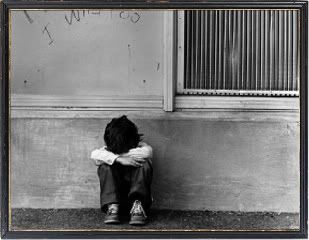 The numbers of children abused in America each year are staggering.
The United States Department of Health and Human Services estimates 879,000 children were victims of child maltreatment in 2000. Of this total, 63% of the children were neglected, 19% were physically abused, 10% were sexually abused and 8% were psychologically abused.
I think we all have to agree it's easier to ignore or deny the estimate that 87,900 children may be sexually abused in our country each year.
How do we wrap our minds around these very high numbers of children abused and neglected?
Certainly, this seems to suggest the incest taboo discussed my Freud and some anthropologists may not be the reality for all families.
Like deMouse reports in his research, the farther one goes back in history, the more extensive and brutal the abuse of children, including infanticide and child sacrifice.
Child sacrifice, the ritualistic killing of children to appease a deity, has been extensively documented throughout history. While the actual purpose of child sacrifice is debated, the fact it commonly occurred is widely accepted.
For example, archeologists have found the remains of 42 children sacrificed to an Aztec deity in the offerings in the Great Pyramid of Tenochtitlan.
So, while we have trouble admitting children are sexually abused, how many of us have thought about the many children who were killed as part of some religious ritual throughout history.
Like deMouse might say, there may have been more to the child sacrifice than simply the appeasement of some deity.
Perhaps, it suggests the notion that children hold special, negative symbolic energy for humans, still present in today's world.
Recovered Memory
 Recovered memories refers to the phenomenon of human beings forgetting aspects of their personal history, especially related to abuse experiences, then remembering it later, often decades later.
Psychotherapists meeting in the safety of the clinical room have often been witness to the lighting up of a person's memory circuits when they begin to remember some earlier abuse experience.
It's a powerful moment for both client and therapist.
A client may become reflective, tuned inward to sensations, images, emotions, then look at the therapist with questioning eyes and begin to piece together a horrible story about themselves.
Memory fragments begin to slowly move into place confirming vague themes about mistreatment at the hands of those who should have been trusted protectors, not the perpetrators of devastating sexual, physical and emotional abuse.
The middle ground of this recovering memory process is where the client resembles an anthropologist staring and exploring different pieces of memory, images and feelings trying to make some sense of things...better understand themselves in the context of an abusive or neglectful life.
At the further end of the continuum, the client's remembering looks like an exploding star from their inner universe of memory, images and feelings.
These first moments of remembering are sacred. People may be overwhelmed with the grief buried for years and even decades.
In my office and in psychodrama workshops, I have witnessed men and women sob and rage for long periods of time as the ice around their hearts starts to thaw and the working through of longstanding trauma begins.
Following the knowledge gained from years of research and clinical experience, therapists follow the client, rather than ask leading questions or use hypnotherapy or guided imagery as a way to unlock the door to these memories.
The remembering occurs because the client feels safe enough or another trauma creates an internal intensity opening the path to trauma memories distorted or forgotten from the past.
